Aloe vera
A succulent from hot, dry climates whose clear gel has been used on the skin since ancient times.
Introduction
Aloe vera (Aloe barbadensis Miller) is a perennial succulent with thick, fleshy leaves that grows where water is scarce. Native to the hot, dry climates of Africa, it is now grown worldwide. Its leaf has two distinct parts: the clear gel at the centre of the leaf, and the bitter yellow latex just under the rind. The gel is about 99% water; the rest holds more than 200 compounds, including vitamins, minerals and polysaccharides such as acemannan (IARC, 2016).
History
According to historical sources, the oldest records of aloe are Sumerian clay tablets from around 2200 BC. The plant was known in ancient Egypt, Greece, Rome and China, mainly for the skin (NCCIH). Skin-care products and drinks made from aloe gel appeared in the 1970s.
Traditional uses
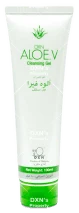
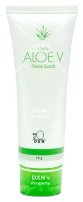
The gel has been applied to the skin for more than two thousand years. The latex was once taken by mouth as a laxative, a use now advised against. The DXN products in this range are skin-care products for external use.
Scientific studies
In 20 healthy women, a cream containing 0.10 to 0.50% aloe vera extract raised the water content of the outer skin layer, measured with a Corneometer, after one application and after 1 and 2 weeks of twice-daily use, compared with the same cream without aloe; water loss through the skin did not change. Another study in healthy women, using a plain 3% aloe gel in water, found no more hydration than water after 4 weeks. Results therefore depend on the formula, and these studies are small. These products are cosmetics, not medicines.
Precautions
- On the skin, aloe gel is generally well tolerated; burning, itching or redness have occasionally been reported. Try it on a small area first.
- Aloe gel is different from aloe juice and latex, which contain anthraquinones with a laxative effect.
- Taken by mouth, the latex can cause cramps and diarrhoea; in the United States it was removed from over-the-counter laxatives in 2002.
- Avoid aloe by mouth during pregnancy and breastfeeding, and talk to your doctor if you take digitalis-type heart medicines.
Further reading: NCCIH
Videos
 (Arabic) Iyadat TeN (TeN TV)عيادة TeN - فوائد جل الصبار واستخداماتهWatch on YouTube (opens in a new tab)
Studies and sources
- Moisturizing effect of cosmetic formulations containing Aloe vera extract in different concentrations assessed by skin bioengineering techniques
In 20 healthy women (aged 20 to 45), a cream with 0.10-0.50% aloe extract raised skin hydration measured with a Corneometer after one application and after 1 and 2 weeks, without changing water loss through the skin.
- In Vivo skin hydration and anti-erythema effects of Aloe vera, Aloe ferox and Aloe marlothii gel materials after single and multiple applications
In healthy women, a 3% aloe vera gel in water did not hydrate the skin more than water; after 4 weeks the skin was even drier. The formula matters.
This information is for discovery only. It does not replace advice from a health professional.