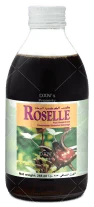
Karkadé (hibiscus)
The bright red calyces of a hibiscus, made into a tangy drink in Egypt, Sudan and far beyond.
Introduction
Karkadé is made from the calyces of roselle (Hibiscus sabdariffa), a bushy annual plant that can reach 2.4 metres. After flowering, the calyx, the part around the flower, becomes thick, fleshy and bright red, with a tart taste close to cranberry. The plant is grown in tropical and subtropical regions: Sudan, Egypt, Nigeria, India, China, Southeast Asia and Mexico. Its colour comes from anthocyanins; it also contains organic acids, including hibiscus acid, vitamin C and pectin (Da-Costa-Rocha et al., 2014).
History
Its exact origin is still debated. According to a 2014 scientific review, work cited by the authors places its domestication in western Sudan more than 6,000 years ago; other sources point to India.
Traditional uses
In Egypt the calyces are made into an infusion or fermented drinks; in Sudan and Nigeria they are boiled with sugar to make karkadé or zoborodo. In Mexico the same drink is called agua de Jamaica. Karkadé is drunk hot or iced. The Egyptian monograph describes an infusion of 1.25 to 1.5 g of calyces in 240 ml of boiling water for 5 to 10 minutes.
Scientific studies
In 8 healthy volunteers, a drink made with an aqueous karkadé extract raised plasma antioxidant capacity (FRAP) and lowered urinary malondialdehyde, a marker of oxidative stress. In 30 healthy adults, 400 ml a day of a sweetened karkadé drink for 30 days was followed by an average blood pressure falling from 113/77 to 108/73 mmHg and HDL rising from 47.0 to 49.5 mg/dl; LDL and triglycerides did not change. That study had no control group and the participants also exercised, so its results are preliminary. Karkadé is a drink, not a medicine.
Precautions
- It may lower blood pressure: if you take blood-pressure medicine, monitor it and talk to your doctor.
- It may change blood sugar and the effect of some medicines, including those that lower blood sugar, chloroquine and simvastatin.
- Stop it at least 2 weeks before planned surgery.
- Not recommended during pregnancy and breastfeeding, as safety data are lacking.
- Avoid it if you are allergic to plants of the mallow family (Malvaceae).
Further reading: Egyptian Drug Authority
Videos
 (English) Dr Michael Greger (NutritionFacts.org)Herbal Tea Update: HibiscusWatch on YouTube (opens in a new tab)
Studies and sources
- Consumption of Hibiscus sabdariffa L. aqueous extract and its impact on systemic antioxidant potential in healthy subjects
Crossover trial in 8 healthy volunteers: higher plasma antioxidant capacity (FRAP) and lower urinary malondialdehyde after a karkadé extract drink.
- Effect of the roselle (Hibiscus sabdariffa L.) calyces drink on the physiological parameters of healthy adult subjects
30 healthy adults, 400 ml a day for 30 days: blood pressure 113/77 → 108/73 mmHg and HDL 47.0 → 49.5 mg/dl; LDL and triglycerides unchanged. No control group.
- Hibiscus sabdariffa L. – A phytochemical and pharmacological review
Reference review of the botany, composition and traditional uses of karkadé.
This information is for discovery only. It does not replace advice from a health professional.