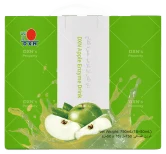
Fermented apple
The apple, its polyphenols and the fermented drinks made from it since ancient times.
Introduction
The apple (Malus domestica) is the fruit of a tree in the rose family, grown mainly in temperate regions. It provides plant compounds such as quercetin, catechin, procyanidins, phloridzin and chlorogenic acid; the peel holds 2 to 6 times more of them than the flesh (Boyer and Liu, 2004). Apples are fermented by yeasts and bacteria into products such as apple vinegar or lactic-fermented drinks (Cousin et al., 2017). No study has been published on the DXN drink itself: this page is about apples and apple drinks in general.
History
According to genetic studies published in 2017, the cultivated apple comes from Kazakhstan, west of the Tian Shan mountains: it descends from a wild apple, Malus sieversii, and spread east and west along the Silk Road. According to a 2017 review, apple drinks are already mentioned by Pliny the Elder.
Traditional uses
Fermented apple juice gives apple vinegar. There are also apple drinks fermented by lactic acid bacteria.
Scientific studies
No study has been published on the DXN Apple Enzyme drink itself. In 23 healthy volunteers, whole apples (550 g a day) and apple pomace were followed by a downward trend in LDL (−6.7% and −7.9%) over 4 weeks; with clear apple juice, which has no fibre, LDL was 6.9% higher than with whole apples. The authors credit the fibre (pectin), which filtered drinks lack, so these results do not apply directly to a drink. This drink is a food, not a medicine.
Precautions
- Apple allergy: more than 70% of people allergic to birch pollen may react to raw apple; cooking reduces the risk.
- Some fermented apple drinks, contain alcohol (1.2 to 8%): check the ingredients on the label.
- Also check the added sugar shown on the pack.
- Filtered drinks no longer contain the fibre of the whole apple.
Further reading: Nutrition Journal
Videos
 (Arabic) Dr Kareem Aliخل التفاح مع كريم عليWatch on YouTube (opens in a new tab)
Studies and sources
- Intake of whole apples or clear apple juice has contrasting effects on plasma lipids in healthy volunteers
23 healthy volunteers, 4-week periods: downward trend in LDL with whole apples (−6.7%) and pomace (−7.9%); higher LDL with clear juice. No effect on HDL or blood pressure.
- Apple phytochemicals and their health benefits
Review of the plant compounds in apples (quercetin, catechins, procyanidins…) and how they are split between peel and flesh.
- Microorganisms in Fermented Apple Beverages: Current Knowledge and Future Directions
Review of the yeasts and bacteria in fermented apple drinks, including apple vinegar and lactic-fermented drinks.
This information is for discovery only. It does not replace advice from a health professional.